The Best Hummingbird Feeders:
A Buyer's Guide

Which feeder the birds actually use, and which one ends up in the trash.
Latest update: October 4, 2026 · 5 minute read
IMPORTANT: If you want a hummingbird feeder the birds actually come to, that holds up, and that you can get clean, look no further. We hung five of the most popular feeders on the same hook and ran every one through the same seven checks: can you get it clean, is it built to last, does it keep the bees out, do the birds find it, is it easy to fill, does it drip, and can the ants get in. Only one came off the hook passing all seven.
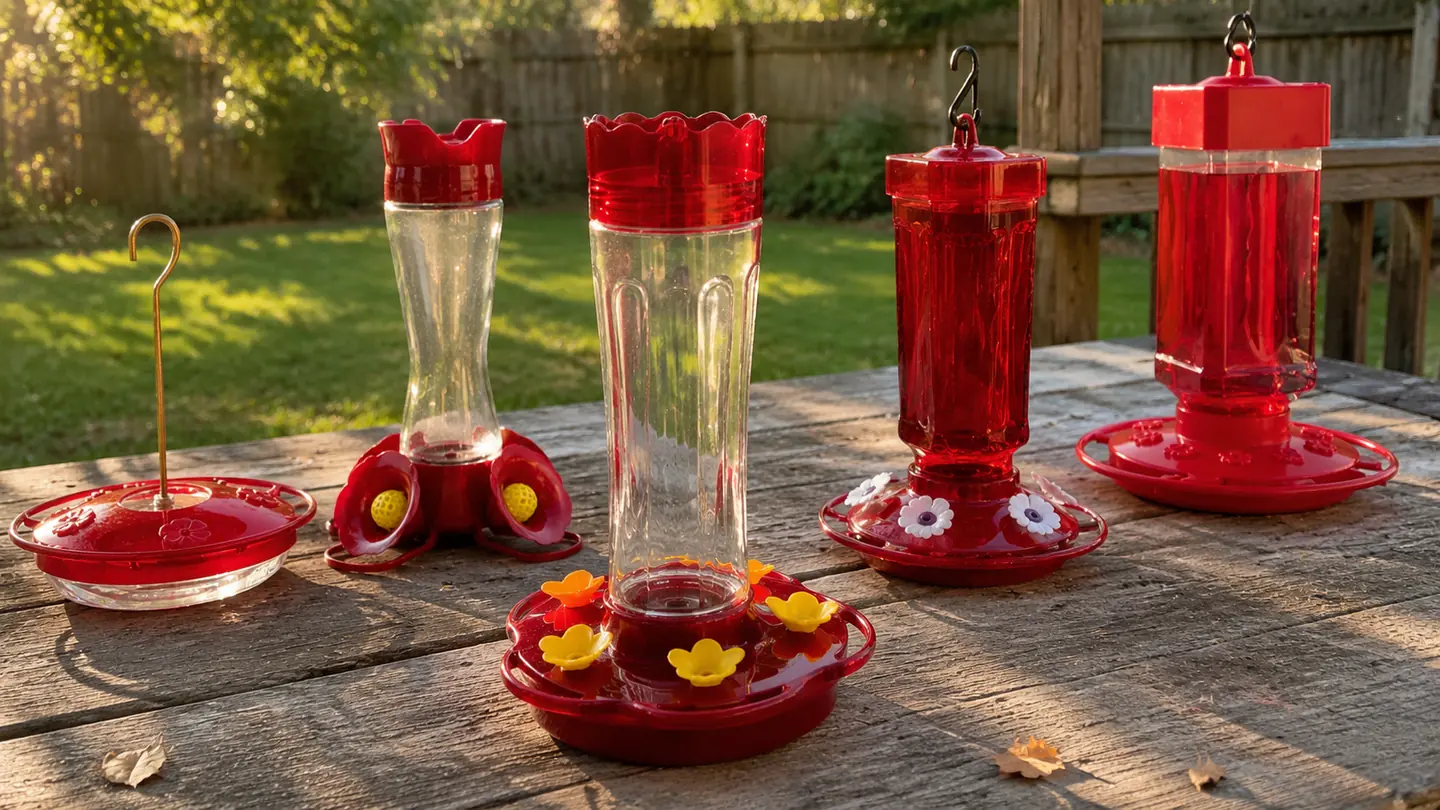
The five hummingbird feeders in this guide together on a garden table in the yard

Ask anyone who has fed hummingbirds for a few years and you hear the same story. The first feeder didn't work out, and neither did the second.

Here's the first problem, and it's the one that stings. You spend real money on a pretty feeder, glass or fancy metal. You hang it where you can see it from the kitchen window. Then you wait.

One or two birds show up all season. Sometimes none. Meanwhile the neighbor's plain red feeder has a crowd.

It isn't your yard. Hummingbirds go for bright red and yellow flowers, not for what looks nice to us. People who have fed them for years say the same thing: the fancy ones sit empty while the plain red feeders stay busy.

The second problem is that most feeders don't last. Glass breaks the first time a squirrel gets curious. Metal rusts, and the birds come less once it starts to smell. Thin plastic turns brittle and cracks.

And the cheap ones leak. A slow drip down the outside, a sticky mess on the deck, and plenty of them end up in the trash within a week.

The ones that survive have one last trick. If you can't get inside to scrub them, mold moves into the corners, and hummingbirds are sensitive to mold. A rinse doesn't reach it.

So people do the natural thing. They give up and throw it out. Not because they lost interest in the birds. Because the feeder never gave the birds a reason to stay.

That's exactly why we wrote this guide.

We put five of the most popular feeders through the same seven checks. Most failed at least one. Only one passed all seven.

Below you'll find what actually separates a feeder you keep from one you quietly retire, what to look for before you spend anything, and the five we ranked.

First, what is really at stake when a feeder goes bad.
What a dirty feeder actually does to the birds

Skipping a wash feels harmless. It isn't. Here's what a neglected feeder does, from the merely annoying to the genuinely dangerous.

Black mold is the real danger

That dark film in the ports isn't dirt. It's mold growing in sugar water. Bird rehabilitators warn that a hummingbird feeding at a moldy port can pick up a fungal infection of the tongue.

The tongue swells, the bird can no longer draw nectar, and it starves at a full feeder. A rinse doesn't remove it. Only a brush on every surface does.

Nectar spoils faster than people think

Sugar water isn't shelf stable once it's hanging in the sun. In hot weather it can turn in two or three days.

You'll see it go cloudy and you may catch a sour, yeasty smell at the port. Birds will drink it anyway, and spoiled nectar makes them ill.

If you can't empty and scrub a feeder quickly, you won't do it often enough.

Ants and bees empty the yard

Insects don't share. Once ants are running into the ports and wasps are working the outside, the hummingbirds stop coming altogether.

They won't fight for a feeder, they'll just go somewhere else. Drowned ants in the nectar also foul it and speed up spoiling, so one problem quietly becomes the other.

A feeder you can't open is a feeder you stop cleaning

This is the one that causes the other three. If the base doesn't come off, if the neck is too narrow for your hand and a brush, you'll rinse it and hang it back up.

Everybody does. The design decides how often it gets washed, not your good intentions. Pick the one that opens and the rest takes care of itself.

Every one of these is avoidable, but only with the right feeder. So what separates a feeder that prevents this from one that causes it? Seven things.

What you need: the 7 things that actually matter

We read through hundreds of owner reviews and counted what people praised and complained about most. These seven came up the most, in this order. Get them right and the feeder mostly looks after itself. Miss one and you're back at the kitchen sink.

1

Comes all the way apart to clean

This is the one owners bring up more than anything else. Sugar water left in a port for a few days turns cloudy and puts down a black film. If the base doesn't come off, you rinse instead of scrub, and a rinse never reaches it. Look for a base that twists fully off and an opening wide enough for your hand and a bottle brush. When every surface faces you, washing takes about two minutes, which means you actually do it.

2

High-quality material that lasts

Cheap feeder plastic is thin and brittle. A few months in, the base cracks or the hanger snaps and the whole thing goes in the trash. Glass looks nicer and brings its own problem: one knock against the hook or one curious squirrel and it's in pieces on the patio. What owners keep praising is thick, heavy-duty plastic that feels solid in the hand and holds its shape year after year. If the plastic flexes when you squeeze it, it won't see out the year.

3

Ports a bee can't reach into

Bees and wasps are a different problem from ants, and a moat does nothing about them. What works is distance. When the nectar sits well below the flower, a bee can't reach it but a hummingbird's tongue still can. Get that gap right and the bees hover at the edge and give up, while the birds drink in peace.

4

Something the birds spot from across the yard

A feeder only works if the birds find it. Hummingbirds home in on red, and the strongest signal is a bright red base and cap that read from a distance. Then they need a reason to stay, which is a perch at every port. A perched bird sits and drinks for half a minute instead of flashing past. Hang a good one and the first bird usually turns up the same day.

5

Easy to fill without a sticky mess

If refilling means sugar water down your wrist and a sticky counter, you put it off, and an empty feeder sends the birds next door. Look for a wide mouth you can pour into straight from the pitcher, and a body clear enough to read the nectar level from the kitchen window, so you know it's time before the birds do.

6

A seal that doesn't drip

This is the quiet one, and it starts most of the trouble on this list. A drip you can't see leaves a sticky trail down the outside, and that trail is exactly what leads the ants and wasps to the ports. Most leaks begin at a rubber washer that hardens and splits over time, so a feeder that seals tight without one has nothing to wear out. No drip, no trail.

7

An ant moat built into the lid

A moat is just a cup of plain water above the feeder. Ants won't swim, so they stop at the edge. The trick is whether it's built in or sold separately. A separate moat is one more thing to hang, one more thing to fill, and the one everybody forgets. A dry moat stops nothing. Built into the lid, you top it up every time you refill the nectar, without thinking about it.

Seven things. Here's how the most popular feeders on the market actually scored against them.

The best hummingbird feeders, compared

All five, side by side, against the seven things that actually matter.

#1 PICK
Matthew 6:26 Hummingbird FeederMatthew 6:26
More Birds Ruby HummingbirdMore Birds
Aspects HummZinger HighViewAspects
Perky-Pet Glass Feeder 2pkPerky-Pet
First Nature 10-Port FeederFirst Nature
Comes Fully Apart to Clean
High-Quality Build
Keeps Bees Out
Birds Find It Fast
Easy to Fill
Leak-Free Seal
Built-in Ant Moat
Holds 12 oz or More
Feeding Ports544410

Based on our own testing and the public product specs at the time of writing.

Only one feeder checked every box. Here's the full breakdown, starting at #1.

1: Matthew 6:26 Hummingbird Feeder

by Maximutt
★★★★★
4.8 average from 18,736 reviews

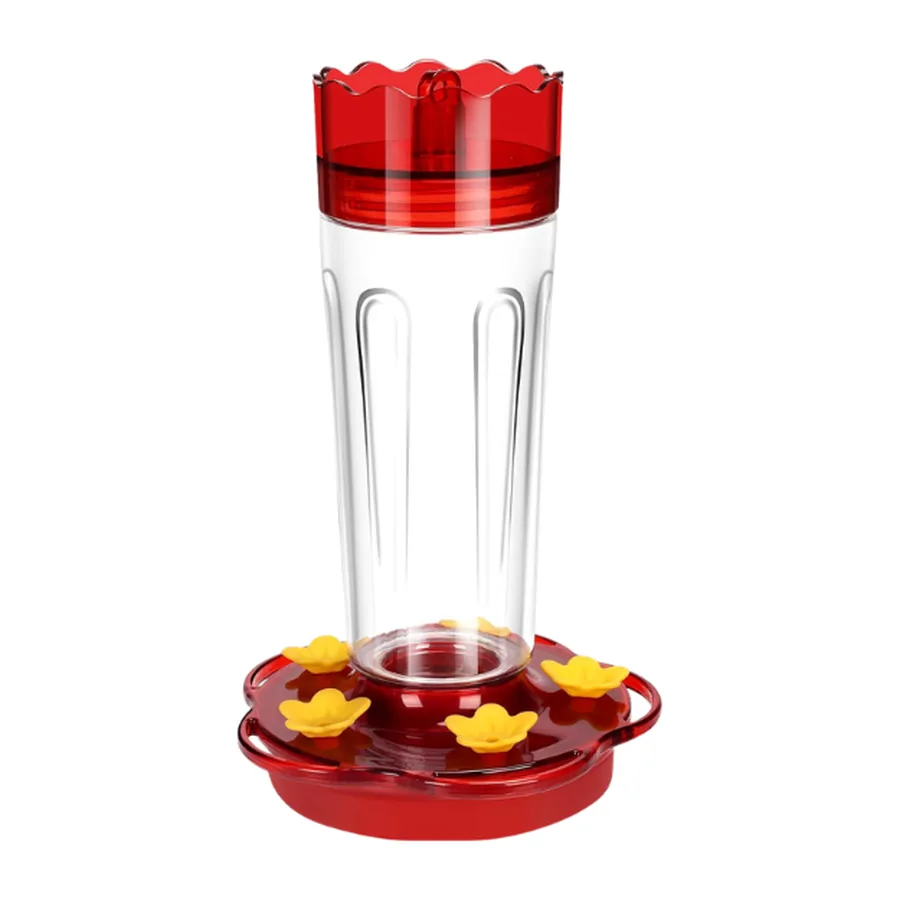
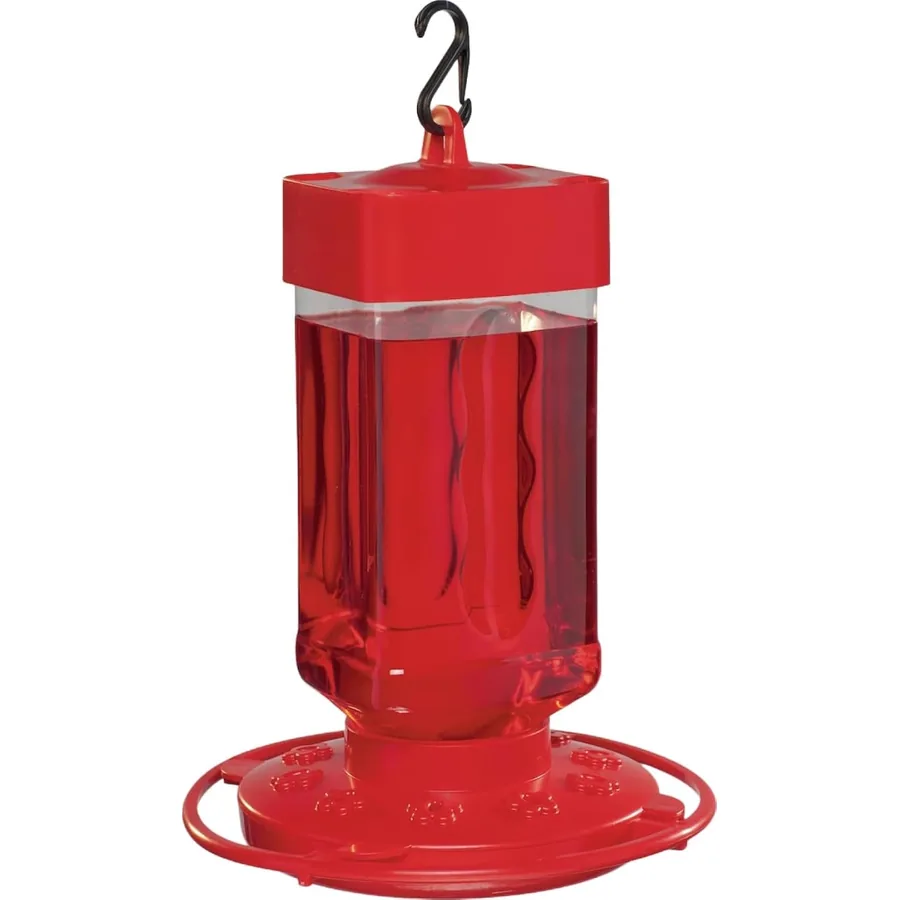
Matthew 6:26 Hummingbird Feeder, a single unit with five flower ports and a built-in ant moat
A+RATING
LEARN MORE
Limited-Time Promotion Detected

PROS

  • Base twists fully off for a bottle brush
  • Thick high-quality plastic, no glass to break
  • Bee-proof ports keep the bees out
  • Bright red, five perched ports, birds come fast
  • Wide mouth, fills without a mess
  • Seals tight with no rubber washer to wear out
  • Built in ant moat, nothing extra to buy
  • 15 oz, see the nectar level at a glance

CONS

  • Only sold on the official site
  • Sells out fast

The Bottom Line

This is the only feeder on the list that passed all seven checks.

Cleaning is where it pulls ahead. The base twists all the way off and the mouth fits your hand and a bottle brush, so washing takes about two minutes at the sink.

It's built to last, too. The plastic is thick and heavy, closer to a blender jar than a party cup, with no glass to shatter the first time a squirrel gets curious.

The bees stay off the ports, the bright red base is hard for a passing hummingbird to miss, and most people see their first visitor the same day.

It seals without a rubber washer, so there's no drip and no sticky trail, and the built-in moat stops the few ants that come looking.

There's one drawback. It's only sold on the official site, and it sells out.

Tap the LEARN MORE button below to see today's promo pricing. It comes with a 99-day money-back guarantee, so you have nothing to worry about.

2: More Birds Ruby Hummingbird

by More Birds

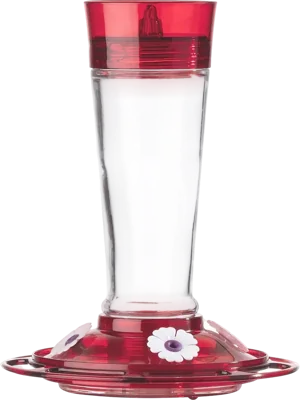
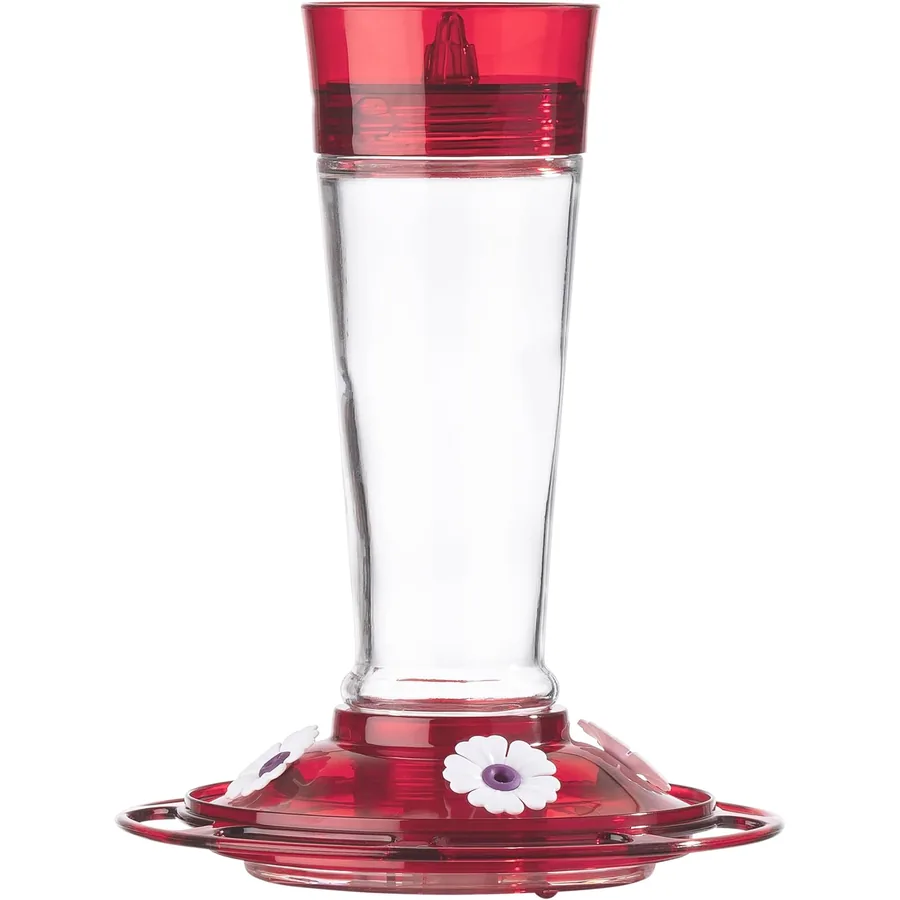
More Birds Ruby hummingbird feeder with a glass bottle and ruby red base
B+RATING
BUY NOW

PROS

  • Pretty Ruby Glass
  • Built-In Ant Moat
  • Birds Find It Fast

CONS

  • Parts Wear Out Fast
  • Bees Get In
  • Spills in the Wind

The Bottom Line

This is a pretty feeder, and the birds take to it quickly. The ruby glass looks great in the sun, and the ant moat is built right into the top.

The weak spot is the small parts. The rubber pieces that hold the flowers tend to break down within a season, and once they go, the flowers start falling off.

Bees can also squeeze into the ports, and it spills when the wind picks up.

It's a good-looking feeder, but it doesn't hold up like our #1, so we couldn't place it any higher than #2.

3: Aspects HummZinger HighView

by Aspects

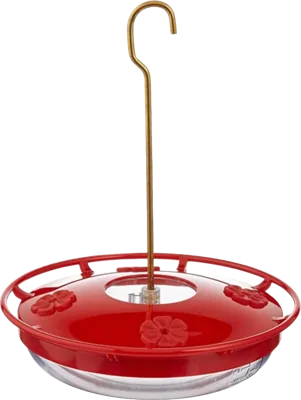
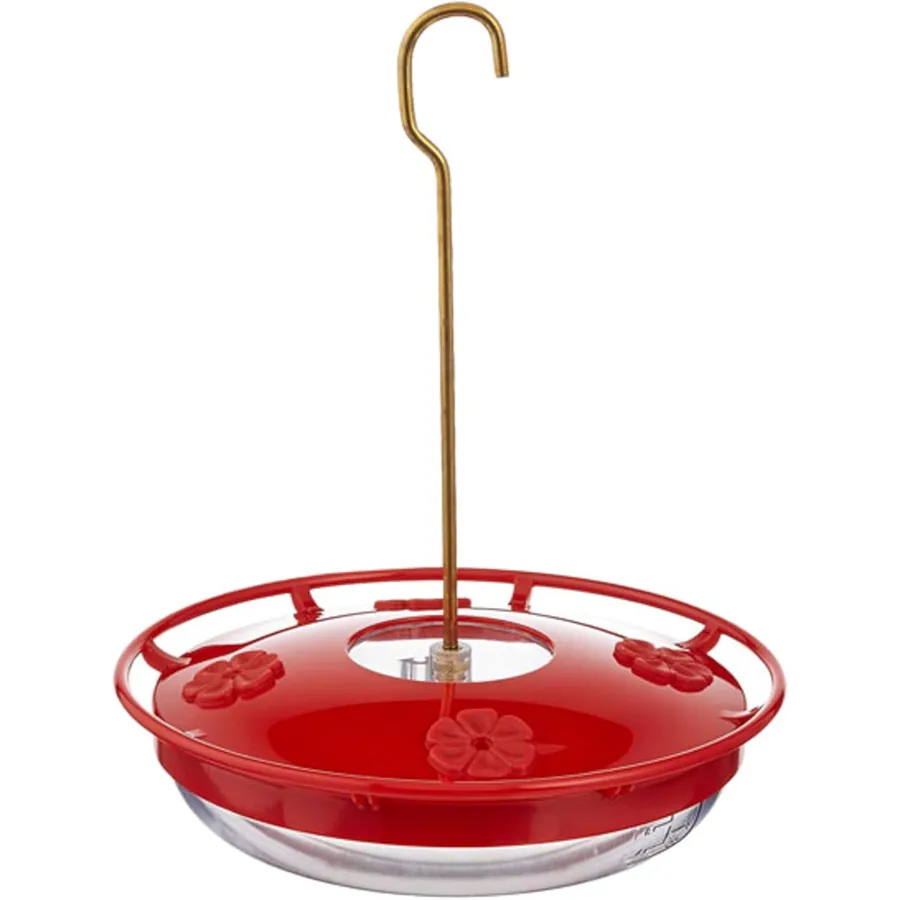
Aspects HummZinger HighView saucer feeder with a raised perch and center hook
BRATING
BUY NOW

PROS

  • Very Easy to Clean
  • Built-In Ant Moat
  • Great View of the Birds

CONS

  • Hanger Mount Breaks
  • Some Birds Ignore It
  • Ants and Flies Get In

The Bottom Line

If cleaning is all you care about, this saucer feeder is hard to beat. Lift the lid, wipe the bowl, done.

The problem is the plastic piece the hanger screws into. It's a known weak spot, and when it snaps, the whole feeder ends up on the ground.

A lot of owners also say their hummingbirds simply ignored it. The moat doesn't always stop the ants, and flies get into the open ports too.

Easy to wash, harder to keep. Overall, a decent pick at #3.

4: Perky-Pet Glass Feeder 2pk

by Perky-Pet

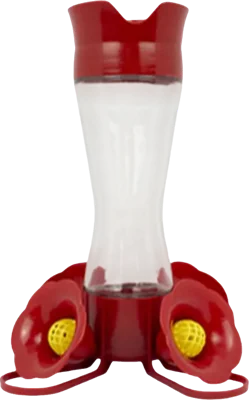
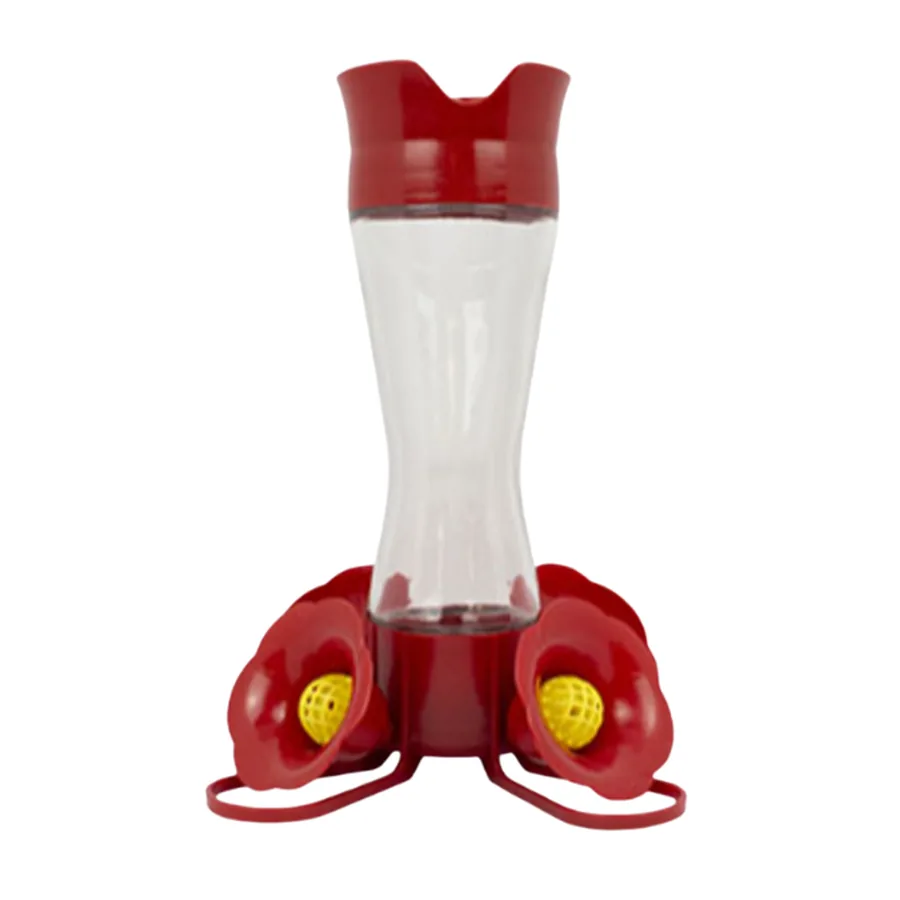
Perky-Pet glass hummingbird feeder with four ports and yellow bee guards
C+RATING
BUY NOW

PROS

  • Clear Glass Bottle
  • Wide Perches
  • Two in the Box

CONS

  • Leaks a Lot
  • Bee Guards Don't Work
  • No Ant Moat
  • Plastic Parts Crack

The Bottom Line

This is one of the best-selling feeders out there, and it's easy to see why. The glass looks nice, the perches are wide, and you get two in the box.

The main drawback is leaking. A breeze or a bird landing is often enough to spill nectar down the side, and with no ant moat, that sticky mess brings the ants.

The bee guards don't do much either. Bees still find a way in.

This option is better than nothing, but expect to wipe up after it.

5: First Nature 10-Port Feeder

by First Nature

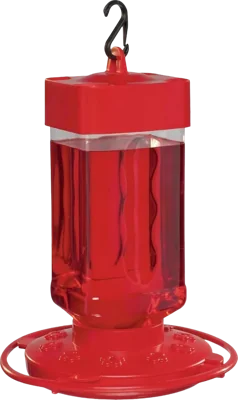
First Nature 32 oz hummingbird feeder with ten ports around a circular perch
CRATING
BUY NOW

PROS

  • 10 Feeding Ports
  • Big 32 oz Capacity
  • Bright Red Base

CONS

  • Bees Take Over
  • Leaks
  • Top Comes Loose
  • Birds' Feet Can Get Caught

The Bottom Line

This feeder is built for a crowd. Ten ports and a 32 oz bottle mean fewer refills on a busy hook.

But the ports are wide, and bees and yellow jackets move right in. Once they do, the hummingbirds tend to stay away.

It also leaks for plenty of owners, the top can work loose over time, and a few people have seen birds get a foot caught in the perch.

On a quiet hook, 32 oz goes bad before it's finished. Great for a crowd, wrong for everyone else.

The #1 Hummingbird Feeder

Five feeders on the same hook, seven checks each. One passed all seven: it comes apart to wash, it's built to last, it keeps the bees out, the birds find it fast, it fills without a mess, it doesn't drip, and the ants stop at the moat. That one is the Matthew 6:26.

The Matthew 6:26 Hummingbird Feeder, the number one pick in this guide

The Matthew 6:26 Hummingbird Feeder

by Maximutt
  • Comes Fully Apart to Clean
  • Thick, Shatterproof Plastic
  • Bee-Proof Ports
  • 5 Perched Feeding Ports
  • Wide Mouth, No-Mess Fill
  • Leak-Free Seal
  • Built-In Ant Moat
  • 99-Day Money-Back Guarantee
2WingsReview#1 PICK
★★★★★
Based on 18,736 reviews
LEARN MORE
Tap for today's promo pricing